
Hypertension (high blood pressure) is a silent, chronic condition where persistently high force against artery walls strains the heart, vessels, brain, and kidneys. This sustained pressure is the primary driver of cardiovascular damage. Unmanaged, it drastically increases the risk of stroke and renal failure.
Blood pressure measures force when the heart pumps (Systolic) and rests (Diastolic). Consistent readings above 130/80 mmHg cause arteries to stiffen.
Hypertension–Kidney Axis: High pressure damages kidney vessels; conversely, kidney issues raise pressure, a dangerous cycle.
Types: Most cases are Primary (genetics/lifestyle); Secondary stems from causes like kidney disease or sleep apnea.
We prioritize early detection since hypertension is often asymptomatic.
Diagnostics: We use 24-Hour ABPM and blood/urine tests (for renal/hormonal markers).
Targeted Care: Our integrated team (cardiologists, nephrologists) targets modifiable risk factors (diet, stress, obesity) and monitors key markers (eGFR).
Proactive management safeguards your arteries and preserves long-term heart and kidney function.

Hypertension (high blood pressure) stems from a complex mix of genetic, mechanical, metabolic, and lifestyle factors. Identifying these root causes is vital for personalized treatment. Dysfunction in one system often impairs the other.
Atherosclerosis & Cholesterol: Plaque buildup in arteries (atherosclerosis) restricts blood flow, driven by high cholesterol.
Hypertension: High blood pressure overworks the heart, damaging vessels.
Metabolic Issues: Diabetes and Obesity accelerate vessel damage, reducing oxygen exchange efficiency.
Smoking & Inactivity: Smoking leads to COPD and coronary disease; inactivity weakens the system.
Chronic Pulmonary Disease: Conditions like COPD and Asthma force the heart to work harder.
Genetics & Environment: Family History and air pollution increase susceptibility.
Our preventive model uses comprehensive risk assessment and personalized intervention for long-term wellness. Partner with us.
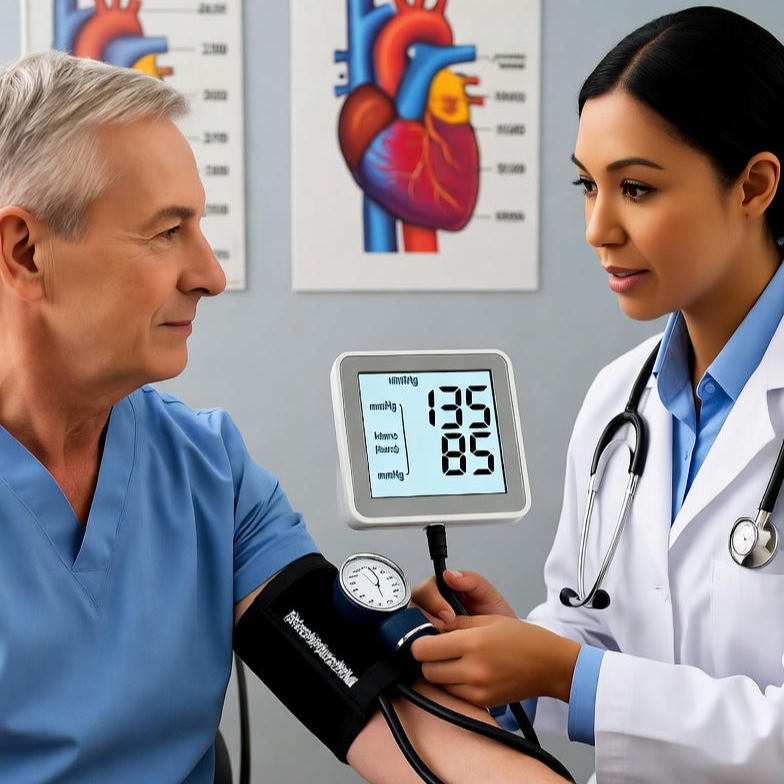
Accurate and early diagnosis of Hypertension (high blood pressure) is vital for preventing cardiovascular and kidney disease. Since it’s often silent, WellGen Health prioritizes precise, continuous evaluation.
Our comprehensive approach ensures we identify not just how high your blood pressure is, but why it’s elevated, using advanced technology:
Continuous Monitoring: We use 24-hour ABPM and Home Monitoring to track pressure variations, uncovering “masked” hypertension.
Comprehensive Kidney (Renal) Assessment: Due to the hypertension–kidney axis, we check for damage using key markers: eGFR, Serum Creatinine, and ACR. We also use Renal Ultrasound/Doppler.
Collaborative Cardio-Renal Evaluation: Our integrated team of cardiologists and nephrologists jointly analyzes results to assess both heart and kidney function, identifying secondary causes like hormonal imbalances or Sleep Apnea.
We use these findings to create a personalized, data-driven plan. Digital Integration and remote monitoring ensure continuous support, empowering you to maintain control and prevent complications like stroke and CKD. Timely detection allows for proactive interventions that preserve long-term organ function.

At WellGen Health, managing hypertension is holistic; we aim to restore balance, protect vital organs, and prevent complications. Our approach is personalized and evidence-based.
Our multidisciplinary team delivers integrated care:
Medication: Targeted regimens (ACE inhibitors, ARBs) stabilize BP and ensure kidney protection.
Kidney Protection: Specialists monitor markers (eGFR, ACR) to break the hypertension–kidney axis and prevent CKD.
Sustainable control relies on personalized lifestyle changes:
Nutrition: Kidney-protective meal plans based on the DASH model.
Exercise: Supervised programs support cardiovascular endurance and weight management.
Stress Management: Holistic interventions (Mindfulness, CBT) reduce stress-induced BP surges.
We use digital health integration and remote monitoring for real-time adjustments and support, ensuring continuous oversight and empowering you to maintain control and thrive longer.

At WellGen Health, taking charge of your blood pressure is about protecting your heart and kidneys. We transform hypertension management into a proactive lifestyle through education and partnership, ensuring you feel informed, motivated, and supported.
Our multidisciplinary team (cardiologists, nephrologists) empowers you through advanced technology:
Remote Monitoring: 24/7 digital connectivity allows real-time BP reading upload and immediate feedback to prevent complications.
Education: We demystify hypertension, covering its effect on your kidneys and heart, medication adherence, nutrition, and stress.
We manage the heart and kidneys as one system for synergistic prevention:
Preventive Care: Comprehensive risk profiling guides personalized medication and nutrition plans that protect both organs.
Sustainable Habits: Coaching focuses on DASH diet principles, exercise, and stress management to build long-term, protective routines and enhance overall resilience.
We view this as a lifelong partnership, using continuous monitoring to help you maintain control and thrive with confidence.
FAQ’s
Everything you need to know about Wellgen & how it can thrive your business.
Hypertension, commonly known as high blood pressure, is a silent, chronic condition where the force of blood against the walls of your arteries remains persistently elevated. This sustained pressure forces the heart to work harder to pump blood through the circulatory system and places excessive strain on the heart, blood vessels, brain, and kidneys, leading to progressive damage that often goes unnoticed until serious complications arise. It is the primary driver of cardiovascular damage and drastically increases the risk of stroke and renal failure if unmanaged. At WellGen Health, understanding hypertension is emphasized as the foundation of prevention, control, and long-term well-being.
When blood pressure rises and consistently exceeds 130/80 mmHg, the arteries—which are designed to be flexible and resilient—gradually become stiffer and narrower due to the constant pressure. This reduces their ability to deliver oxygen-rich blood efficiently, forcing the heart to exert more effort. Over time, this excessive workload can lead to left ventricular hypertrophy (thickening of the heart muscle), increased risk of arterial plaque buildup, and eventual organ strain, particularly in the kidneys where delicate filtration structures are sensitive to pressure changes.
Blood pressure measures the force exerted by circulating blood on the walls of your arteries and is recorded using two key numbers: Systolic Pressure (the top number), which indicates the pressure in your arteries when your heart contracts and pumps blood, and Diastolic Pressure (the bottom number), which reflects the pressure when your heart relaxes between beats. Normal blood pressure typically ranges around 120/80 mmHg. Consistent readings above 130/80 mmHg are considered high and cause arteries to stiffen, straining the cardiovascular system.
The kidneys play a crucial role in regulating blood pressure by balancing fluid and sodium levels in the body. When blood pressure is too high, the small blood vessels (glomeruli) inside the kidneys can become damaged, impairing their ability to filter waste effectively. Conversely, kidney disease itself can raise blood pressure by disrupting hormonal and fluid balance, creating a dangerous cycle known as the hypertension–kidney axis. This interdependence means patients with chronic kidney disease (CKD) often have high blood pressure, and those with uncontrolled hypertension are at elevated risk for kidney decline. WellGen Health monitors renal function markers such as creatinine, eGFR (estimated glomerular filtration rate), and urine protein levels (including ACR) to ensure early detection and intervention.
Not all hypertension is the same. Primary (essential) hypertension is the most common form, accounting for nearly 90–95% of all cases. It develops gradually over many years due to a combination of genetic factors, aging, lifestyle habits, and environmental influences. Secondary hypertension results from an underlying medical condition that disrupts the body’s natural regulation of blood pressure. Possible causes include kidney disease or renal artery stenosis, hormonal disorders such as hyperthyroidism, Cushing’s syndrome, or primary aldosteronism, sleep apnea, certain medications such as oral contraceptives, steroids, or decongestants, and adrenal gland tumors (pheochromocytoma).
Unlike primary hypertension, secondary hypertension may improve or even resolve when the root cause is properly treated. WellGen Health specializes in pinpointing these causes through advanced diagnostics and multidisciplinary evaluation.
Primary hypertension develops gradually due to genetic predisposition combined with lifestyle and environmental factors. Common contributors include high sodium intake, obesity, chronic stress, lack of physical activity, and excessive alcohol consumption. While its exact cause may be unclear in many cases, it is highly manageable through lifestyle adjustments and appropriate medical therapy.
Hypertension is often called the silent killer or silent danger because it frequently produces no obvious symptoms until major organs like the heart, brain, or kidneys are already compromised. Many people live for years unaware their blood pressure is high, only discovering it after a severe event such as a stroke, heart attack, or kidney failure. Subtle or non-specific signs that may occur include headaches, dizziness, shortness of breath, nosebleeds, or blurred vision. Regular screening and monitoring are the only reliable methods for early detection. WellGen Health prioritizes early detection since hypertension is often asymptomatic and educates patients on the importance of routine checks.
Hypertension results from the cumulative effect of genetic predisposition, environmental exposure, and lifestyle patterns. Key risk factors include family history of high blood pressure or cardiovascular disease, high-sodium diet and processed food consumption, sedentary lifestyle and obesity, chronic stress and poor sleep quality, smoking and excessive alcohol intake, and underlying conditions such as diabetes, kidney disease, or thyroid disorders. Additional contributors noted include atherosclerosis and high cholesterol, metabolic issues like diabetes and obesity that accelerate vessel damage, smoking and inactivity, chronic pulmonary diseases such as COPD and asthma that force the heart to work harder, and environmental factors like air pollution. WellGen Health uses comprehensive risk assessment to identify and target these modifiable factors.
Accurate and early diagnosis is vital for preventing cardiovascular and kidney disease. WellGen Health prioritizes precise, continuous evaluation because hypertension is often silent. Their approach identifies not just how high blood pressure is but why it is elevated, using advanced technology and an integrated team of cardiologists and nephrologists.
WellGen Health employs 24-hour Ambulatory Blood Pressure Monitoring (ABPM) to track pressure continuously day and night, uncovering patterns, fluctuations, and masked or white coat hypertension. They also use home blood pressure monitoring systems for consistent tracking and identifying lifestyle triggers. Comprehensive blood and urine tests evaluate kidney function (including eGFR, serum creatinine, and ACR), electrolyte balance, and hormonal factors. Cardiac and renal imaging such as renal ultrasound/Doppler and other advanced ultrasound, Doppler, or MRI technologies detect structural changes in arteries, heart, or kidneys. Collaborative cardio-renal evaluation jointly analyzes results to assess heart and kidney function and identify secondary causes like hormonal imbalances or sleep apnea. Lifestyle and risk assessments analyze daily habits, diet, stress levels, and activity to tailor plans. Digital integration and remote monitoring support continuous oversight.
At WellGen Health, managing hypertension is holistic and aims to restore balance, protect vital organs (especially the heart and kidneys), and prevent complications like stroke and CKD. Their multidisciplinary team delivers personalized, evidence-based, integrated care through the Hypertension and Kidney Care Program, treating the heart and kidneys as one interconnected system. The focus is on early detection, targeting modifiable risk factors, breaking the hypertension-kidney axis, and empowering patients through education and ongoing support.
Targeted medication regimens, such as ACE inhibitors and ARBs, are used to stabilize blood pressure while providing kidney protection. Specialists closely monitor key markers like eGFR and ACR to prevent progression to chronic kidney disease and ensure organ protection as part of breaking the hypertension-kidney cycle.
WellGen Health uses digital health integration and remote monitoring for real-time adjustments and continuous support. Patients can upload blood pressure readings 24/7 via digital connectivity, receiving immediate feedback to prevent complications. This empowers ongoing oversight, helps maintain control, and supports proactive interventions alongside in-person care.
The multidisciplinary team of cardiologists, nephrologists, nutritionists, and lifestyle experts works collaboratively to manage the heart and kidneys as one system for synergistic prevention. They perform joint analysis of diagnostic results, create personalized medication and nutrition plans based on comprehensive risk profiling, monitor organ function, and provide coordinated care to protect arteries and preserve long-term kidney and heart health.
WellGen Health believes knowledge is powerful medicine and uses an education-focused care model. Patients learn to interpret their blood pressure readings, recognize lifestyle and dietary triggers, adhere to prescribed medications, manage stress through breathing, mindfulness, and activity, and monitor kidney health through regular checkups. Personalized health coaching, dietary consultations, and structured monitoring programs help make hypertension management part of daily routine rather than a burden.
Their preventive model uses comprehensive risk assessment and personalized intervention for long-term wellness. This includes proactive management of modifiable risk factors (diet, stress, obesity), continuous monitoring of markers like eGFR, integrated cardio-renal wellness programs, sustainable habit coaching focused on DASH diet principles, exercise, and stress management, and digital tools for ongoing support. The goal is to safeguard arteries, preserve organ function, and help patients thrive with confidence through lifelong partnership.
WellGen Health is located at 8220 WALNUT HILL LN, STE 600, Dallas TX, 75231-4433. They can be reached by phone at (844) 886-7362 or by email at Info@wellgen-health.com. Appointments can be booked online through their website for hypertension screening and care.
Hypertension may be silent but is far from inevitable—with the right medical support and lifestyle changes, it can be prevented, controlled, and even reversed in many cases. The first step is to schedule a hypertension screening or consultation with WellGen Health’s integrated Hypertension and Kidney Care Program. Their team provides comprehensive evaluation, personalized plans, education, and ongoing support to protect arteries, preserve kidney function, and empower patients to live full, active, heart-healthy lives. Early action through routine checks and proactive partnership helps avoid irreversible damage.