
If you’ve read our main article, When Worry About Your Health Becomes Health Anxiety, you already know that paying attention to your body is not the problem—how that attention shows up in your thoughts and daily life is what matters. Many people who experience health anxiety believe they’re simply being cautious, proactive, or responsible. In reality, their worry may be quietly taking over far more mental and emotional space than they realize.
This self-assessment guide is designed to help you reflect on whether your health-related concerns feel manageable and helpful—or persistent, distressing, and disruptive.
Being Careful vs. Being Consumed by Worry
Being careful about your health usually looks like:
- Noticing symptoms without panicking
- Seeking medical advice when something seems off
- Feeling reassured after evaluation or testing
Health anxiety, on the other hand, tends to feel:
- Constant, intrusive, and hard to shut off
- Disproportionate to medical findings
- Resistant to reassurance
If your mind keeps returning to “What if they missed something?” even after normal exams or tests, that’s an important signal to pay attention to.
Thought Patterns That Suggest Health Anxiety
Health anxiety often lives more in thought patterns than in symptoms themselves.
1. Catastrophic Thinking About Sensations
You may automatically jump to worst-case scenarios:
- A headache becomes a brain tumor
- Chest tightness means a heart attack
- Fatigue signals a serious undiagnosed disease
These thoughts feel urgent and convincing, even when there’s little evidence to support them.
2. Difficulty Trusting Medical Reassurance
You may hear “everything looks normal,” but your mind responds with:
- “What if the test was wrong?”
- “What if this doctor missed something?”
- “What if it’s too early to show up?”
This often leads to repeat visits, additional testing, or seeking new providers instead of relief.
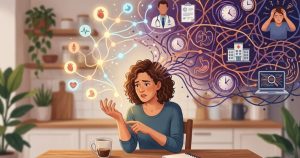
3. Constant “What If?” Loops
Health anxiety feeds on uncertainty. You might replay scenarios in your head repeatedly, trying to solve uncertainty rather than tolerate it. Unfortunately, certainty is rarely possible in medicine—so the loop never truly ends.
Behaviors That Go Beyond Being Proactive
Certain behaviors can temporarily reduce anxiety, but over time they actually reinforce it.
Repeated Symptom Googling
Searching symptoms online can feel like taking control, but it often escalates fear. You may notice:
- Compulsive searching late at night
- Fixation on rare or severe diagnoses
- Increased anxiety after reading medical forums or articles
Instead of clarity, you’re left feeling more overwhelmed and alert to every sensation.
Frequent Medical Visits or “Doctor Hopping”
While follow-ups are sometimes appropriate, health anxiety may drive:
- Multiple appointments for the same issue
- Requests for repeated tests despite normal results
- Frustration when providers don’t order “just one more test”
Services like Diagnostic Testing Services are valuable tools—but when testing becomes about reassurance rather than medical necessity, it may be a sign of anxiety rather than illness.
Constant Body Monitoring
You may find yourself:
- Checking your pulse, breathing, or blood pressure repeatedly
- Examining your body for changes multiple times a day
- Mentally scanning for sensations as soon as you wake up
This hyper-awareness makes normal bodily sensations feel threatening.
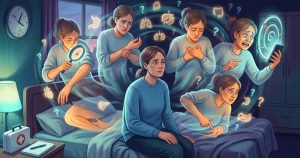
How Health Anxiety Affects Sleep
Sleep is often one of the first casualties of health-focused anxiety.
Common sleep-related signs include:
- Difficulty falling asleep due to racing thoughts about symptoms
- Waking up at night to check your body or Google symptoms
- Interpreting normal nighttime sensations as medical emergencies
Over time, poor sleep increases physical discomfort and emotional vulnerability, intensifying anxiety. Learning about the connection between anxiety and sleep through resources like Understanding Sleep Disorders can be an important step toward breaking this cycle.
The Impact on Relationships
Health anxiety doesn’t only affect the person experiencing it—it often spills into relationships.
Reassurance-Seeking From Loved Ones
You may frequently ask:
- “Does this look normal to you?”
- “Do you think this is serious?”
- “Are you sure I’m okay?”
Loved ones may initially offer reassurance, but over time they can feel helpless, exhausted, or unsure how to support you.
Social Withdrawal
Fear of symptoms or medical emergencies can lead to:
- Avoiding travel, exercise, or social events
- Cancelling plans “just in case”
- Feeling safest at home where you can monitor your body
This shrinking of life space can quietly reduce joy and connection.
When Real Medical Conditions Are Also Present
An important and often confusing reality: health anxiety can coexist with real medical diagnoses.
If you manage conditions like:
- Diabetes or hormonal imbalances
- Chronic pain or joint issues
- Cardiac or pulmonary concerns
…you may still experience health anxiety layered on top of legitimate care needs. Services such as Diabetes & Endocrinology care or Chronic Pain Management address physical health—but anxiety affects how symptoms are interpreted and feared.
This is not a personal failure. It’s a sign that both physical and mental health deserve attention.
Quality of Life Red Flags
You may be experiencing health anxiety if worry about health:
- Takes up hours of your day
- Interferes with work, school, or focus
- Prevents enjoyment of food, exercise, or rest
- Leaves you feeling “on edge” most of the time
Even if all tests are normal, the distress itself is real—and treatable.
When Support Makes a Difference
Health anxiety responds best to care that treats the whole person. Evidence-based mental health care helps you:
- Reduce compulsive checking and reassurance-seeking
- Learn to tolerate uncertainty safely
- Rebuild trust in your body and medical system
Accessing Mental Health Support is not a sign that your symptoms aren’t real—it’s a sign that your experience is being taken seriously.
Integrated care models, supported by Care Navigation, help ensure that physical and emotional needs aren’t treated in isolation.
Providers like Dr. Jamal Lone emphasize listening to patterns over time—not just individual symptoms—so care plans feel grounding rather than overwhelming.
Gentle Next Steps If This Resonates
If you recognize yourself in several of these signs, consider:
- Establishing one trusted primary care provider for continuity
- Setting boundaries around online symptom searches
- Discussing anxiety openly with your provider
- Exploring therapy alongside medical care
Resources such as Finding Your Ideal Primary Care Physician can help you build a care relationship that feels stable and supportive.
You’re Not Overreacting—You’re Struggling
Health anxiety isn’t about being dramatic or careless. It’s about a nervous system stuck in protection mode. With the right support, that alarm system can quiet—and life can feel bigger, calmer, and safer again.
To learn more about whole-person care, explore WellGen Health’s services, meet our providers, or read more insights on the WellGen Health Blog.
Awareness is the first step—and you’ve already taken it.
Related Posts